

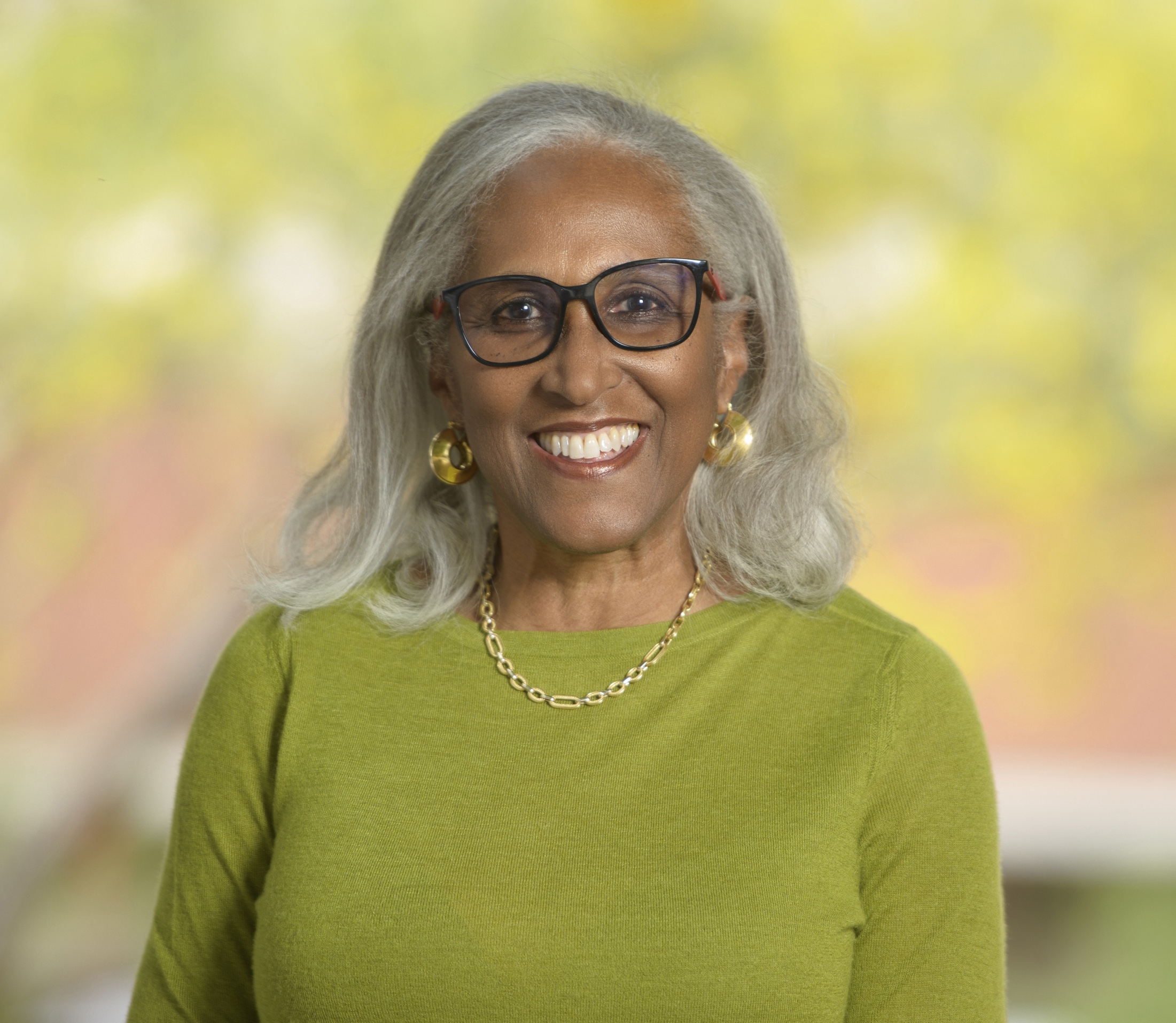
As a nationally recognized physician‑scientist and leader in gastroenterology, Dr. Juanita L. Merchant has spent her career navigating research, clinical care, and leadership at the highest levels. She is an alum of the Harold Amos Medical Faculty Development Program (AMFDP), now known as the Amos Institute for Medical Faculty Development (AIMFD), and serves as Chief of Gastroenterology and Hepatology at the University of Arizona. Most recently, she was selected as President of the Association of American Physicians (AAP), a reflection of both her scientific contributions and the national network she has built throughout her career.
“I trained in both molecular biology and internal medicine, and I use the science to really drive my clinical interest, which for me has landed on the cancer side,” Dr. Merchant says. “My research started out with a focus on GI peptides and normal stomach physiology when I was a postdoc, and then morphed into trying to understand how these normal signaling pathways in the stomach are modified during transformation.”
A defining turning point in Dr. Merchant’s research came when Dr. Barry Marshall and Dr. Robin Warren discovered Helicobacter pylori, reshaping how scientists understand peptic ulcer disease and gastric cancer. The finding demonstrated that a bacterial infection and the associated inflammation, rather than acid, were the underlying drivers, reframing these as the central mechanism. That insight continues to guide Dr. Merchant’s work today as she studies the pathways that sustain chronic inflammation in the stomach.
“‘I was recruited from the University of Michigan to the University of Arizona in 2018, so I’m at the end of my eighth year here,” she says. ”I used to have an outpatient clinic, but I no longer do because of the demands of running the division and maintaining my lab. I have graduate students and I still do endoscopy, and staff the inpatient service, so I continue teaching fellows, residents and medical students.”
Dr. Merchant’s path into academic medicine was shaped early on through her experience as an Amos Scholar. Selected in 1987, she entered AMFDP while building her research foundation and defining her direction. It was also a time when Dr. Harold Amos, a founding member of the program’s advisory board, was actively involved.
“I applied for the Amos program when I was a postdoc in molecular biology after residency,” Dr. Merchant says. “It was the best thing for me. I was able to get things started in the lab, compete for the Amos grant, and build momentum at a really critical point in my career.”
In addition to the support and protected time she received, Dr. Merchant recalls the opportunity to learn directly from Dr. Amos himself. Through informal gatherings and research discussions, he helped set expectations for how to think, present, and grow within academic medicine.
“Dr. Amos would host these evening meetings once a month and ask us to present,” she says. “At the time, you don’t fully understand the importance of it, but he was really teaching us how to think critically about our research, how to approach the work and how to communicate our studies.”
Dr. Merchant emphasizes that AMFDP’s lasting impact extends far beyond funding. What stayed with her most was the network it created and the perspective it offered on how to move her career forward. Through close mentorship and a broader community of support, Amos fosters a level of engagement that sets it apart from other programs.
“My Amos mentor recruited me to Michigan, served as my mentor, and gave me my first job. That relationship changed the trajectory of my career,” she says. “You need that person you can have a safe space with. The Amos network as a whole is like concentric rings. You have people you can go to for different things, whether it’s science, career decisions, or navigating challenges.”
Having served on AMFDP’s selection board since 1999, Dr. Merchant is focused on how Amos can continue to support the next generation of physician-scientists. In a time of uncertainty around research funding and increasing complexity in academic medicine, that support is more important than ever.
“It’s not really clear whether we can depend on the federal government to fund most of the research. That’s why, in the end, the Amos program is still very relevant, especially for junior faculty trying to get established,” she says. “We’ve created a robust network over more than 40 years of the program, and we hope to carry forward the legacy that Dr. Amos started as we pass the baton to the next generation.”
We invite you to invest in the Amos Institute for Medical Faculty Development and the leaders who are expanding life expectancy, strengthening communities, and shaping health policy across the country. Support AIMFD by making a gift today.